
Update on Research about Early Detection of Neurodegenerative Disease
May 12, 2026
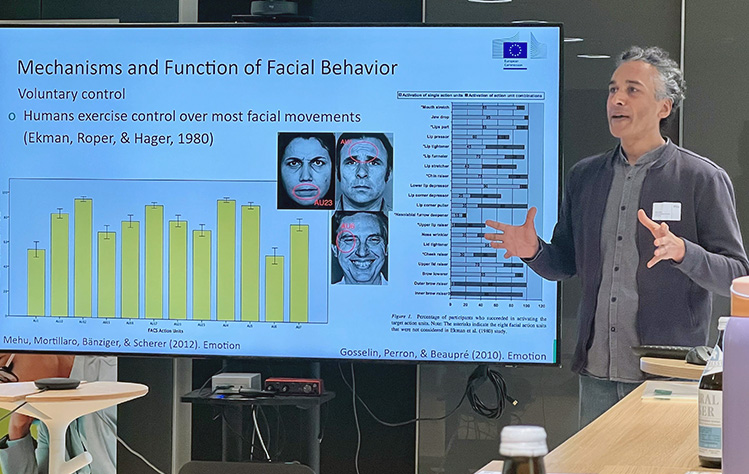
Webster Vienna Private University’s Dr. Marc Méhu, Head of the Psychology Department and Associate Professor, is engaged in an ambitious international research initiative titled Motor Health and Semiotic Function in the Kinesthetic Expressivity of Neurodegenerative Disease (MASKED).
The project is funded under the Horizon Europe Framework Programme through the Marie Skłodowska-Curie Actions (MSCA) Staff Exchanges initiative. Through MSCA, the European Commission supports research excellence by fostering international collaboration, researcher mobility, and innovative doctoral and postdoctoral training.
MASKED brings together a multidisciplinary consortium of researchers from Europe and North America working at the intersection of biosemiotics, multimodal behavioral analysis and social neuroscience. The central objective of the project is to develop a reliable, behavior-based assessment tool that can contribute to both the early detection and long-term monitoring of neurodegenerative diseases.
A key focus of Méhu’s study is hypomimia—a reduction in facial expressivity frequently observed in individuals with Parkinson’s disease and related disorders. Often described as “facial masking,” hypomimia reflects underlying changes in motor control and emotional processing. Despite its clinical relevance, it remains underutilized as a diagnostic marker due to challenges in consistent measurement and interpretation.
By integrating advances in the psychology of facial expression, in semiotics, and in computational analysis, the MASKED project seeks to develop valid and reliable tools to systematically capture and quantify hypomimia. This approach has the potential to transform how clinicians identify early-stage neurodegenerative conditions, enabling more timely intervention and improved patient outcomes.
Through its collaborative and interdisciplinary framework, MASKED exemplifies the goals of Horizon Europe: to advance scientific knowledge while addressing pressing societal challenges. The project underscores the growing importance of behavioral indicators in clinical diagnostics and highlights the role of international partnerships in driving innovation in health research.
The consortium is currently exploring new ways of quantifying facial expression alongside establishing a benchmarking dataset of facial expressivity in healthy individuals. Such dataset will allow comparisons between what is considered healthy facial behavior and the facial movements observed in patients diagnosed with a range of conditions (including Parkinson’s disease and affective disorders). The analysis strategies are innovative in that they involve the application of empirical linguistics laws to the study of facial behavior, beyond the traditional connections made by psychologists between the face and emotions.
Another objective of the project is to develop a new conceptual model for the understanding of facial behavior, which integrates the biological mechanisms responsible for its production, its affective and motivational determinants, and its function in interpersonal settings and social relationships. The innovative character of the project is that it goes beyond the purely mechanistic and biologically oriented modes of interventions that often place the socio-emotional aspects of patients to the side. While knowledge about the organic underpinnings of neuro-degenerative diseases is fundamental, understanding the socio-cultural implications of living with hypomimia is equally important for the development of treatment practices that respect the patient’s well-being and social connectedness in old age.